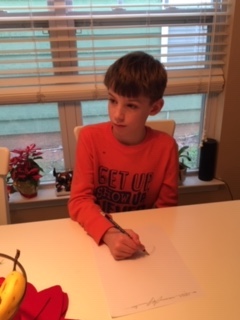
Drawing or doodling helps students’ memory skills. It is well known that drawing something while participating in class helps a person remember. The reason being, it helps a person to process information in several ways. It helps visually, kinesthetically, and semantically. Therefore, it is a way to double a student’s recall process.
No matter if a student is aimlessly doodling or spontaneous sketching, it makes it easier for a student to focus and listen. Realistically, it does not matter if students are doodling something related to a presented topic or not. Memory skills get a boost. Drawing and doodling help the brain remain active. This is better than the attempt to pay attention or stay focused. Also, it is a state of mind between awareness and daydreaming. Thus, allows for creative ideas.
Doodling Disadvantage
Even though the ‘artist’ is paying attention, doodling or drawing may be a distraction to other students or to the person speaking. It usually means that the so-called artist is not paying attention. However, with the exception of improving memory, the student doodling may miss important components of content. Furthermore, some professionals say the shapes and objects drawn provide clues to the state of mind of the ‘artist’.
Drawing and Doodling Advantages
Many say that doodling and drawing is a stress release. In addition, it does not only release stress, but it also reduces anxiety. However, many feel it is just fun. In boring situations, doodling and drawing keeps a person awake. It keeps the brain turned on and helps it to process information. Researchers suggest that drawing results in better recall because of how concepts are stored in memory. This is because the drawer must elaborate on the meaning of the drawing. Thus, information on content embeds in the details of the drawing or doodle image.
However, educators that permit doodling and drawing must make sure the notes work for the student in how they remember concepts. If so, students can create the style of notes that makes sense for their recall of information.