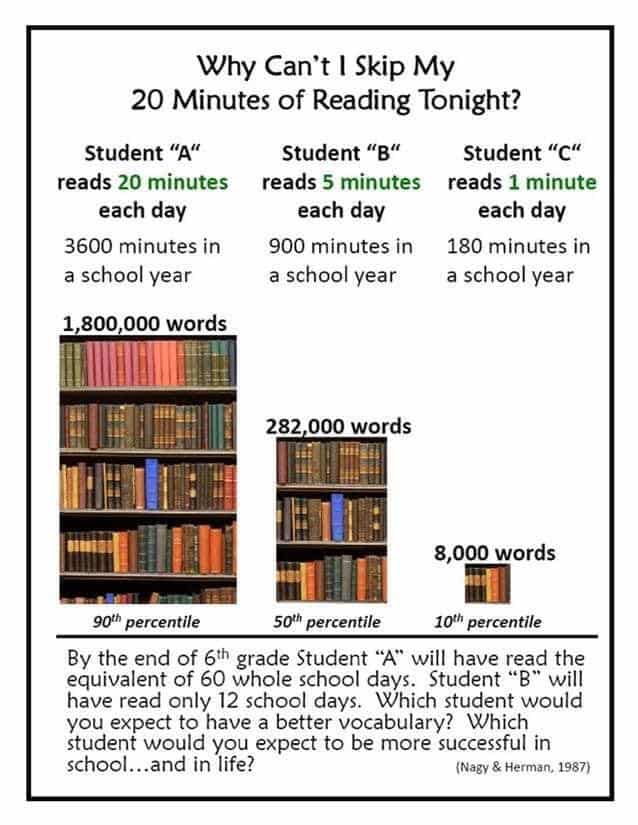

Repetition is a large part of a student’s learning. It’s the central part of learning because it transitions a skill from the conscious part of the brain to the subconscious. Thus, it allows a connection between prior learning to new learning. Through repetition, skills gradually become easier to use. Therefore, the student does not need to think about the skill and can concentrate on new skills and content. However, the interval between repetitions is needed. The interval between the repetition is important to make sure a skill or task embeds.
Repeating skills and activities increases speed in the recall of information. Consequently, it increases a student’s confidence. Teachers and parents use many strategies during the day for students to remember a variety of facts or skills. Strategies help to organize information into patterns. Hence, encourages learning for a purpose. Repetition is the mainstay of all learning. For that reason, not only does practice makes perfect, perfect practice makes perfect.
Repetition and Other Means
A variety of means help recalls content and facts. Repetition is not the only means.
- Pictures help students remember. Visual clues in place of words aid students in remembering.
- Physical areas help recall. As students think about where they saw something or learned something aids in the recall.
- Rhymes help to remember. Create a rhyme or have students create their own rhyme to learn a skill.
- Mnemonics also help students remember.
- Music and songs for the recall is another strategy. The creation of a simple tune helps students.
Several strategies help trigger the memory. However, repeating skills in a timely manner is helpful. Throughout history, some of the most famous speeches “I Have a Dream” and “We Shall Fight on These Beaches” contain repetition. They help an audience understand a point.
There are many ways students learn skills, facts, and processes. Thus, these make way for critical thinking and problem-solving. Also, effective learning is not just about constant repeating. It is about smart repetition.