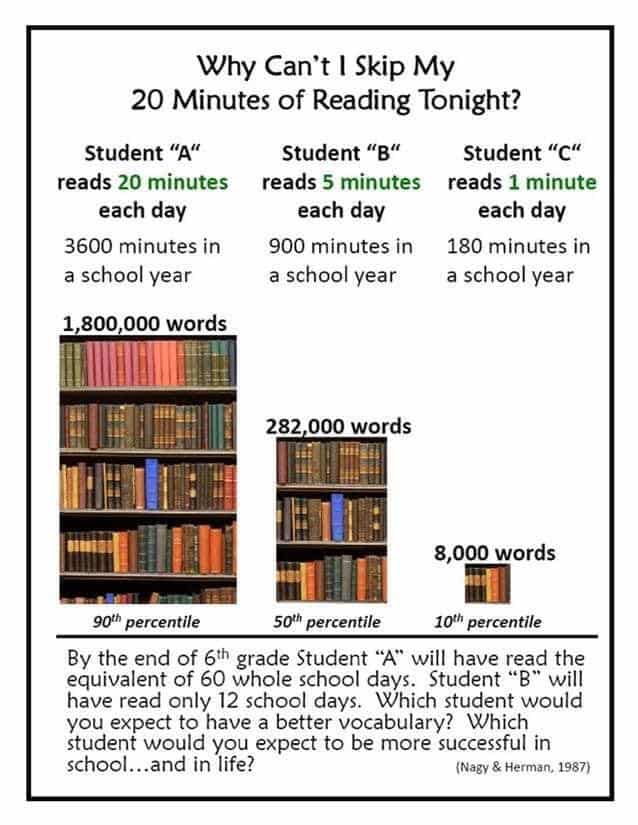
The science of reading is evidence that shows how reading and writing develop and why some students have difficulty. Research from the science of reading shows that reading during the summer months, when students are out of school, strengthens their literacy skills and prevents the summer slide.
Research shows the brain is not naturally developed for reading. The timeframe of evolution is too short for the brain to evolve to recognize words. Thus, it is developed for speech. Reading is a complex process of seeing and understanding words in relation to sounds.
- Reading develops empathy and helps students to see other perspectives.
- It improves critical thinking skills.
- Reading builds communication skills.
- Social skills are learned through reading.
- It helps strengthen cognitive processes.
- Background knowledge is developed through reading.
- Reading builds memory.
The Science of Reading in the Summer
Reading during the summer keeps students engaged in learning. Students who read during the summer months perform better in school. Summer reading, however, declines among students ages 15 to 17. Many teens see reading as uncool. Some have lost the habit of reading. There are many distractions in the summer that cause teens to lose interest in reading. Distractions such as social media, seeing friends, and sports cause a lack of interest in reading. However, reading during the teen years is essential to developing an interest in lifelong learning. Summer reading provides all students a chance to learn, relax, and escape the real world.
Digital Reading
Students can access digital books from the local library. Audiobooks and other digital libraries provide many books for summer reading. Reading on the phone, tablet, or computer can provide opportunities for students to stay motivated to continue developing literacy skills during the summer.
Choosing a digital book means there is access to read at any time, and it is more convenient than carrying around a book. Most teens have phones with an app for easy access. Students can listen or read in the car when on the go.
Read, Read, Read
Through summer reading, students increase comprehension, reading fluency, vocabulary, phonics, and phonemic awareness. Reading several books during the summer prevents learning loss. James Kim, assistant professor of education at Harvard University, found it best when adults and teachers help students select appropriate reading material. He states: “The benefits of reading books during summer vacation were also consistent for all ethnic groups. In particular, reading four to five books had significantly larger effects than reading three or fewer books.”
It’s important to keep the learning moving forward with reading. Students should start by choosing a book of interest. Motivation increases when reading interesting topics. Start small and choose several genres, authors, and alternatives to fiction.
Reading is more than learning and building skills. It fosters relaxation. It lets students meet various characters and experience new adventures while broadening their perspective of life.